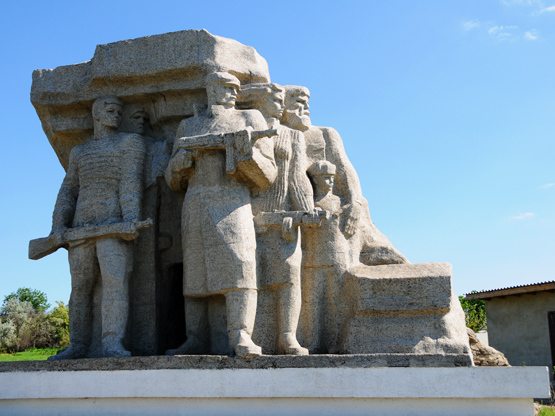
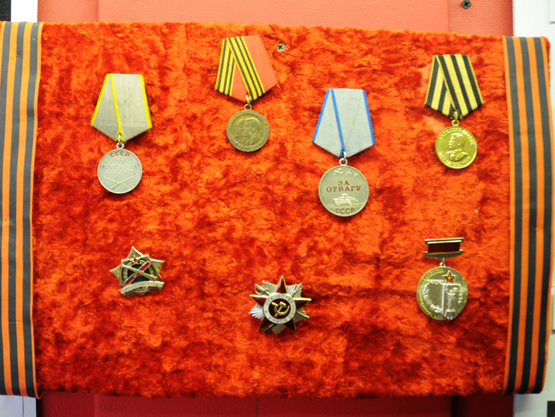
Like much of Eastern Europe, Odesa has a complicated and devastating World War II history. Axis forces attacked the city in 1941, with Romanian troops carrying out most of the siege. After more than two months of fighting, Soviet forces evacuated and Romanian troops occupied Odesa in October 1941. The city remained under Romanian administration, allied with Nazi Germany, until Soviet forces retook it in April 1944.
Above is a memorial honoring those who fought during the war, along with a display of military medals. The museum contained weapons, equipment and personal items connected to the fighting around Odesa.
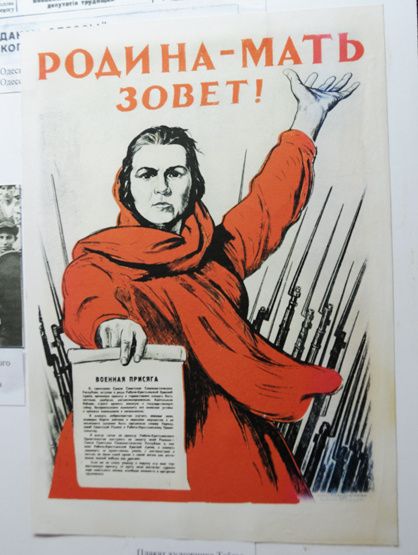
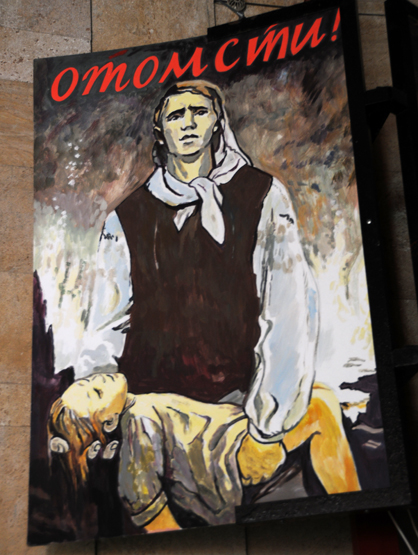
These are two examples of Soviet wartime propaganda. The poster on the left is the famous The Motherland Calls!, while the poster on the right carries a message calling for revenge against the invading forces.
One of Odesa’s most unusual features is the enormous network of catacombs beneath the city and surrounding region. Estimates put the combined tunnels at roughly 2,500 to 3,000 kilometers, making them one of the largest underground networks of their kind in the world. Despite the name, most of these passages aren’t natural caves. They were created primarily by quarrying the soft limestone, or coquina, used to construct much of Odesa during the nineteenth and early twentieth centuries.
After sections of the quarries were abandoned, the tunnels served many different purposes. Smugglers and criminals used parts of them as hiding places, and during World War II Soviet partisan groups used sections of the catacombs as underground bases while fighting the Axis occupation. There are entrances scattered throughout Odesa and the surrounding area, although most of the network isn’t open to visitors.
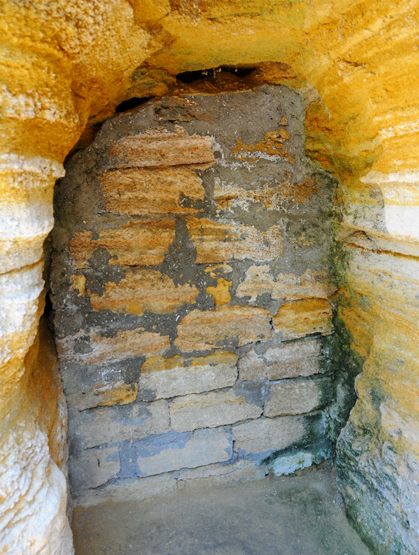
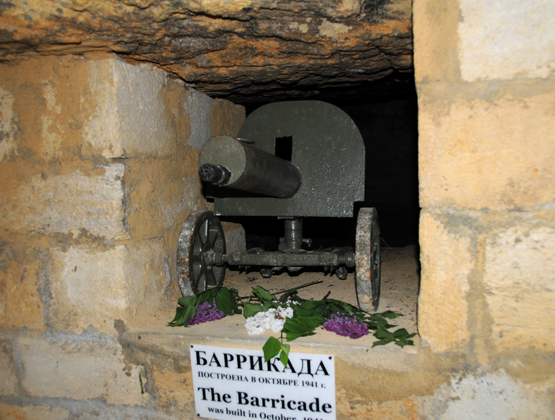
The blocked passage on the left gives an idea of how easily sections could be sealed off. On the right is a reconstructed defensive position showing how a partisan fighter might have guarded an underground approach. Fighting from these dark, narrow tunnels gave the partisans an enormous advantage over anyone unfamiliar with the maze.


Entering the catacombs was one of my favorite experiences in Ukraine. The tunnels were dark, eerie and completely different from anything above ground. Walking through them made it much easier to appreciate how difficult underground life must have been for the partisan groups operating here during the occupation.
The section open to visitors is associated with the Museum of Partisan Glory in Nerubaiske, just outside Odesa. The museum was established in 1969 and commemorates the partisan movement in the region, particularly the detachment commanded by Vladimir Molodtsov-Badayev. Many of the underground displays have been reconstructed from historical records and eyewitness accounts to demonstrate how the partisans lived and operated.
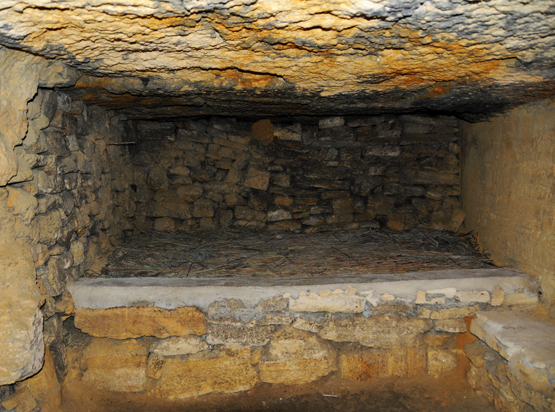
Life underground required more than simply finding a place to hide. The museum recreates some of the infrastructure used by partisan units, including areas for meetings, sleeping and other everyday activities. The large communal bed on the right gives some idea of how cramped living conditions could become.
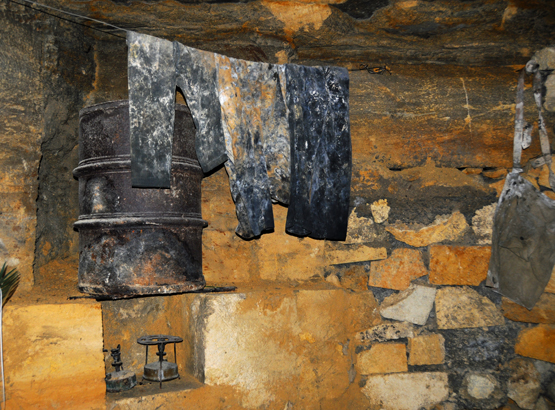
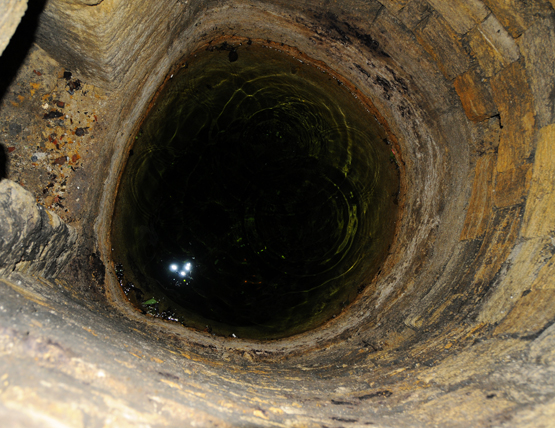
The displays also show how clothing could be washed and dried underground. Access to water was even more important. The well on the right provided a local water source, something that would have been essential for anyone trying to remain hidden underground for an extended period.
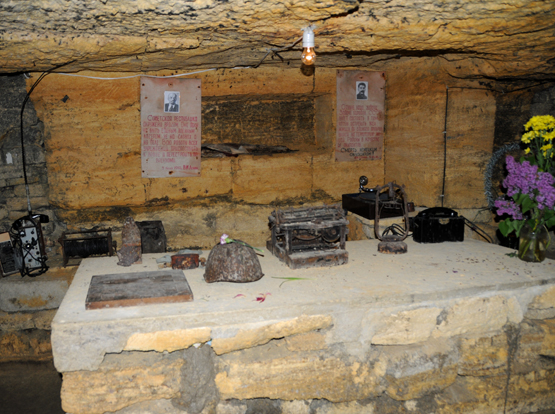
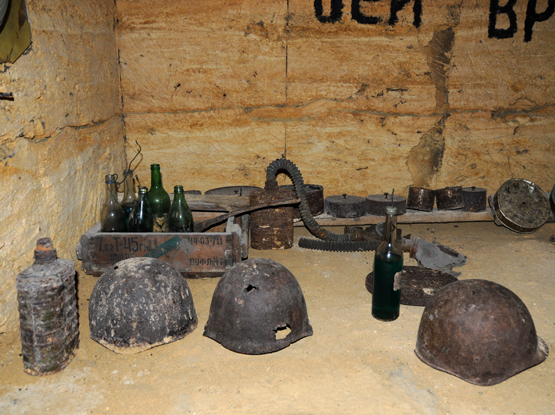
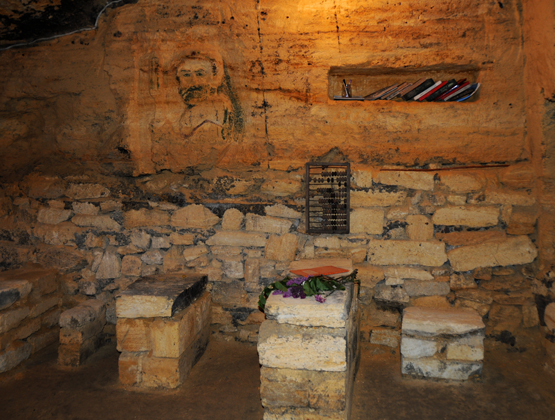
Some of the objects displayed throughout the museum are authentic wartime artifacts, while others are replicas used to reconstruct what life in the catacombs would have looked like. On the left is a recreation of a partisan command area, while the display on the right includes equipment and improvised weapons associated with World War II, including Molotov cocktails.
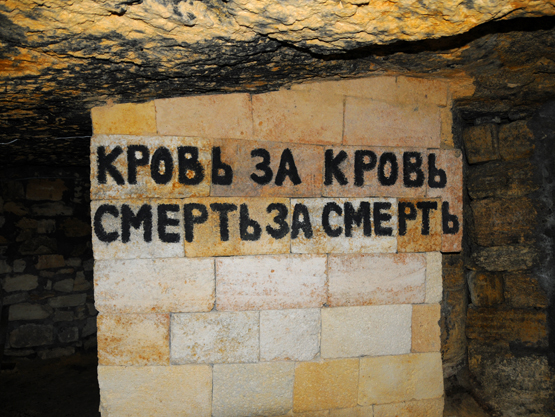
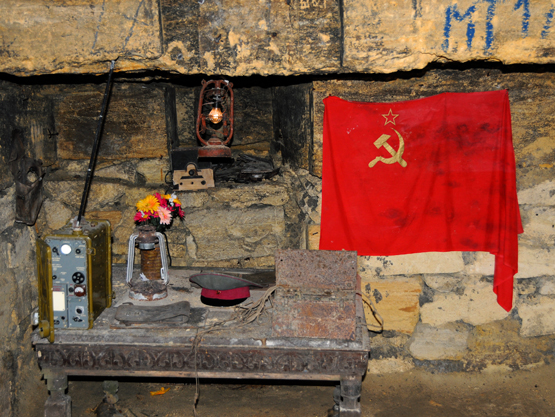
On the left is a restored or repainted slogan associated with the partisans who operated in the catacombs. On the right is a museum reconstruction showing what the office or command area of a Soviet partisan leader might have looked like.
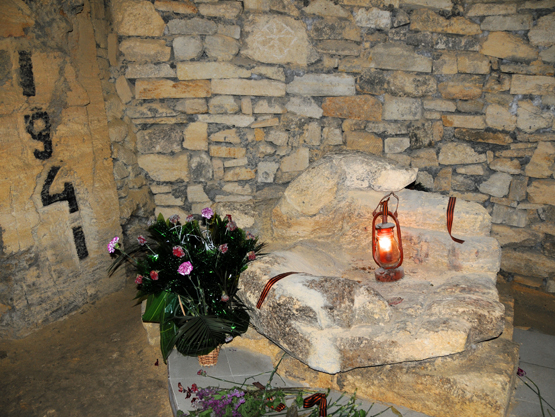
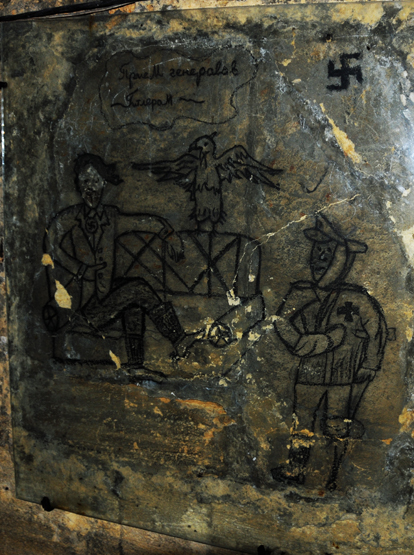
The memorial above honors the partisan fighters who operated from the catacombs during World War II. The museum itself was established decades after the war, but some inscriptions and drawings preserved within the tunnel system date to the wartime period. The drawing on the right is an anti-Axis caricature mocking the occupying forces.
The museum exhibits only a tiny piece of the vast underground network, but walking through it was enough to understand why the catacombs became such an important part of Odesa’s wartime history. Above ground, the city changed hands and armies fought for control. Beneath it was another world entirely—dark, confusing and well suited to people who needed to disappear.
Explore More of Odessa
WWII & The Catacombs