One of the hardest parts of traveling has always been seeing people living in circumstances far more difficult than my own. It can feel strange trying to enjoy a trip while passing communities struggling with poverty, disaster or other hardships.
The only volunteer trip I’ve ever taken was to Sri Lanka in early 2005, just after the devastating Indian Ocean tsunami of December 26, 2004. I happened to be between jobs when one of the deadliest natural disasters in modern history struck communities throughout the Indian Ocean region, and I decided this was an opportunity to do something useful.
Of course, I managed to create a problem almost immediately.
I have a remarkable talent for losing things when I travel, and when I arrived in Sri Lanka I realized I had lost all the contact information for the people I was supposed to meet.
My flight landed around 3:00 in the morning. Someone working around the airport approached me, and I tried explaining that I had traveled there to volunteer but could no longer contact the organization I was supposed to meet. He seemed much more interested in selling me tours around Sri Lanka.
I couldn’t believe it. I had traveled to the other side of the world to help after a massive disaster and, within minutes of arriving, someone was trying to sell me a vacation package.
He at least helped me get to Colombo, where I found a hotel and crashed after the long journey. The following morning I managed to contact a Sri Lankan church that was organizing relief supplies for displaced communities. I never found my original volunteer group, but I still ended up doing exactly what I had come to Sri Lanka to do.
Two things are important to understand about this page. First, roughly 90 percent of my time in Sri Lanka was spent volunteering, so I didn’t experience the country the way I normally would as a traveler. Second, this was long before photography became such an important part of my travels. I took very few pictures, and the ones I did take came from a pretty basic camera by today’s standards.
I’d love to return someday under completely different circumstances, reconnect with some of the people I met and finally explore more of Sri Lanka’s history, wildlife, mountains and coastline.
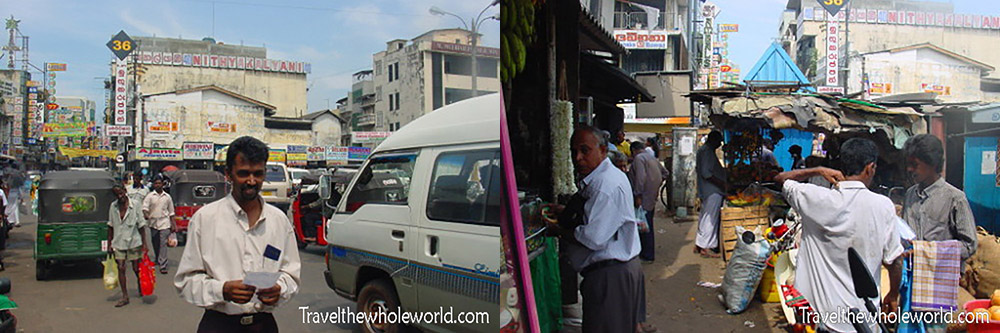
Sri Lanka’s administrative capital is Sri Jayawardenepura Kotte, while nearby Colombo remains the country’s largest city and commercial capital. I actually didn’t learn about Sri Jayawardenepura Kotte until after leaving the country; during my trip, like many visitors, I thought of Colombo simply as the capital.
These photographs were taken around a market in Colombo only a short time after the tsunami. The worst destruction had occurred along other parts of Sri Lanka’s coastline, particularly in the east and south, so Colombo itself still felt busy and active.
One of the people in the photograph became a friend during my stay.
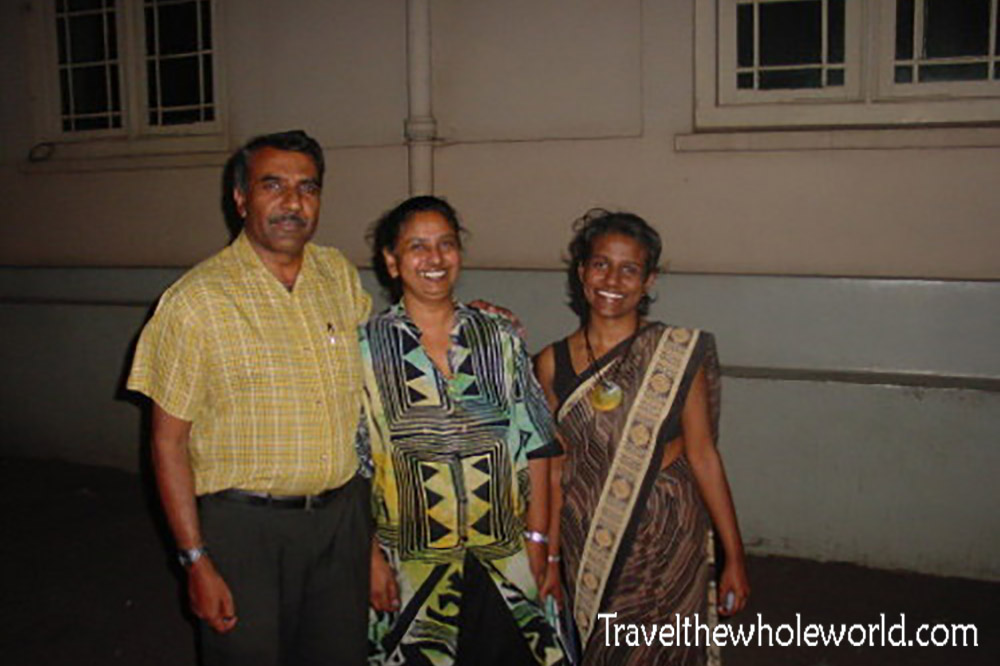
These were some of the people from the church who helped organize the relief effort I joined. Most days we packed food, clothing and hygiene supplies in Colombo before loading everything onto trucks bound for communities affected by the tsunami.
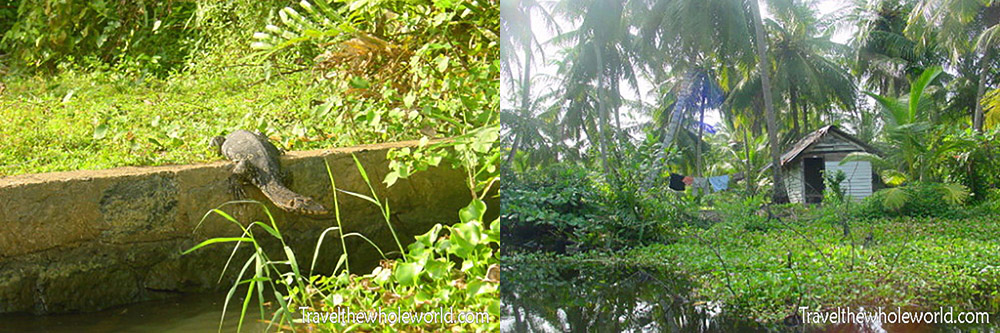
Most of my days were dedicated to relief work, but once our expected supplies didn’t arrive and there was nothing for us to pack. With an unexpected day off, I decided to see at least a little of Sri Lanka’s natural environment.
I took a boat through a wetland and mangrove area not too far from Colombo. Even on such a short excursion, I saw a surprising amount of wildlife. Before we had even left the nearby village, I spotted this enormous monitor lizard.
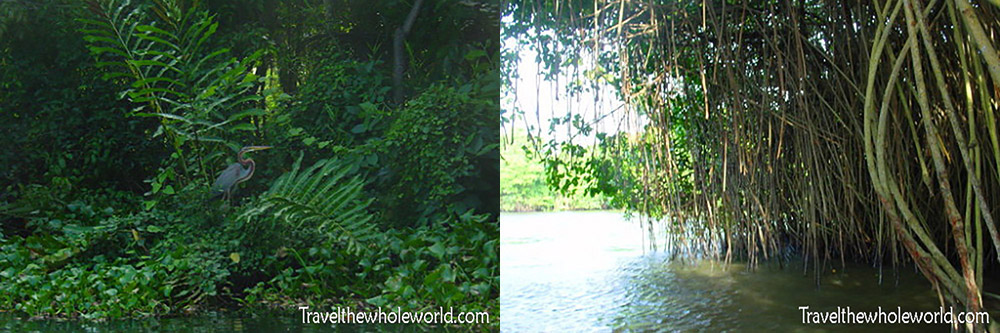
I saw monkeys, reptiles and several species of birds during the trip. This large heron would probably have made a much better photograph with the cameras I use today, but considering what I had at the time, I think I did the best I could.
I wasn’t sure how frequently tourists passed through the area, but nearly everyone I saw along the way smiled and waved as our boat passed.
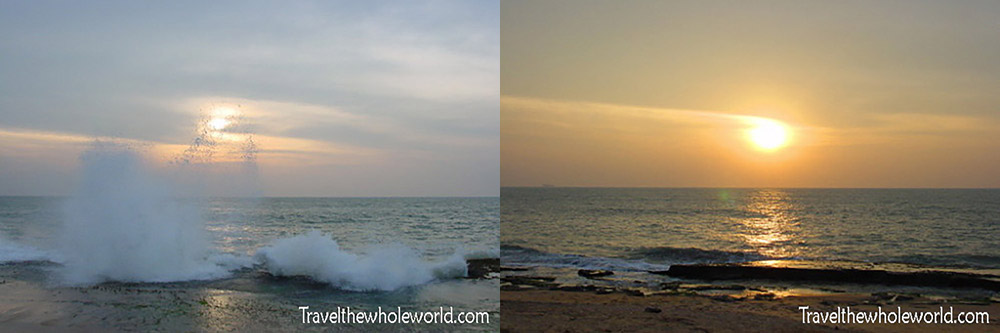
Later that same day I stopped along the coast before returning to my room. Even during such a brief visit, it was obvious how beautiful Sri Lanka’s beaches could be. Spending more time along the coastline is definitely something I’d make a priority on a future trip.
The rest of my time was spent helping with relief deliveries. At night I would ride with a truck driver carrying supplies from Colombo toward communities on Sri Lanka’s eastern coast.
The journeys were slow. We passed numerous police and military checkpoints where we were questioned, asked for identification or occasionally had the cargo inspected. Despite the interruptions, every officer I dealt with was polite and professional, and the checks usually took only a few minutes.
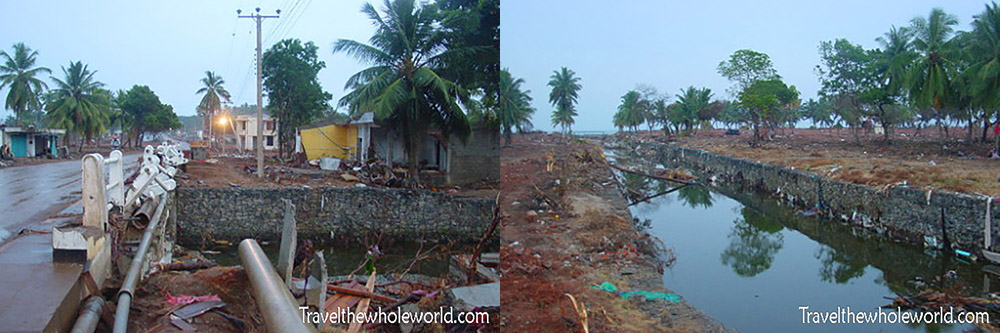
These photographs show some of the destruction around Batticaloa, one of the eastern areas struck hard by the tsunami. Bridges, roads, homes, businesses and entire communities along Sri Lanka’s coastline were damaged or destroyed.
One structure I photographed had been ripped apart badly enough that even heavy metal railings were twisted by the force of the water. Another area had previously held a busy market. By the time I arrived, almost nothing remained.
The drive to Batticaloa could take most of the night. Between checkpoints, damaged infrastructure and rough roads, we rarely traveled quickly. I remember falling asleep during one trip and waking up to discover that our truck was moving backward.
A large elephant was walking toward us in the road.
Apparently we had decided the elephant had the right of way.
The roads were so rough that getting meaningful sleep inside the truck was almost impossible anyway.
During one delivery, we reached a church being used to shelter displaced people at around five in the morning. I was exhausted and asked to use the bathroom.
While I was inside, a man followed me in and began watching me. When I tried to leave, he closed the door and made sexual advances toward me. I started yelling, and he ran away. I never saw him again.
At the time I didn’t really know what to make of what had happened. Later, I read reports about women and girls facing sexual violence and insecurity in some of the temporary camps established after the tsunami. That made the encounter bother me even more. I had been a male foreigner who could yell, defend myself and leave. People displaced from their homes didn’t necessarily have those same advantages.
That experience became another reminder that natural disasters don’t end when the water disappears. Destroyed homes, separated families, overcrowded shelters and the breakdown of normal community protections can create entirely new dangers for survivors.
The tsunami devastated huge sections of Sri Lanka’s coastline. Nationwide, tens of thousands of people were killed or reported missing, hundreds of thousands were displaced and enormous numbers of homes and livelihoods were destroyed.
Even seeing the aftermath firsthand, it was difficult to understand the force required to cause some of the damage around me.
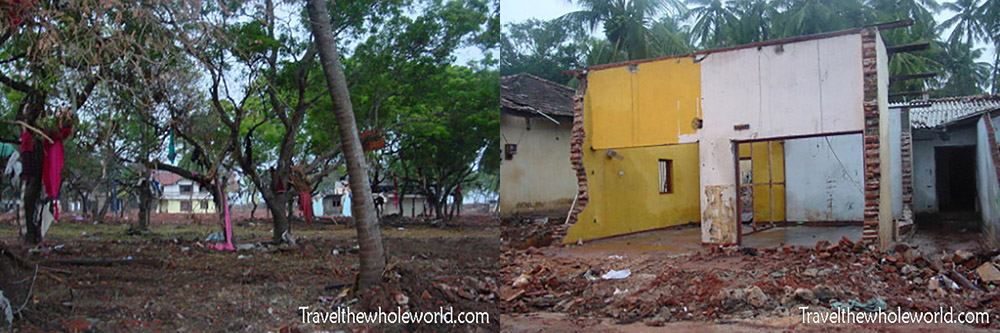
I saw clothing caught high in trees, debris scattered far from where it had originated and large structures twisted or collapsed. One radio tower that must once have stood dozens of meters high had been crumpled into an almost unrecognizable mass.
This wasn’t the Sri Lanka trip I would have chosen under normal circumstances, but it became one of the most meaningful trips I had taken up to that point in my life. I saw very little of the country as a tourist, yet I experienced a side of Sri Lanka that I never could have understood from sightseeing alone.
I hope the next time I return will be under much happier circumstances.