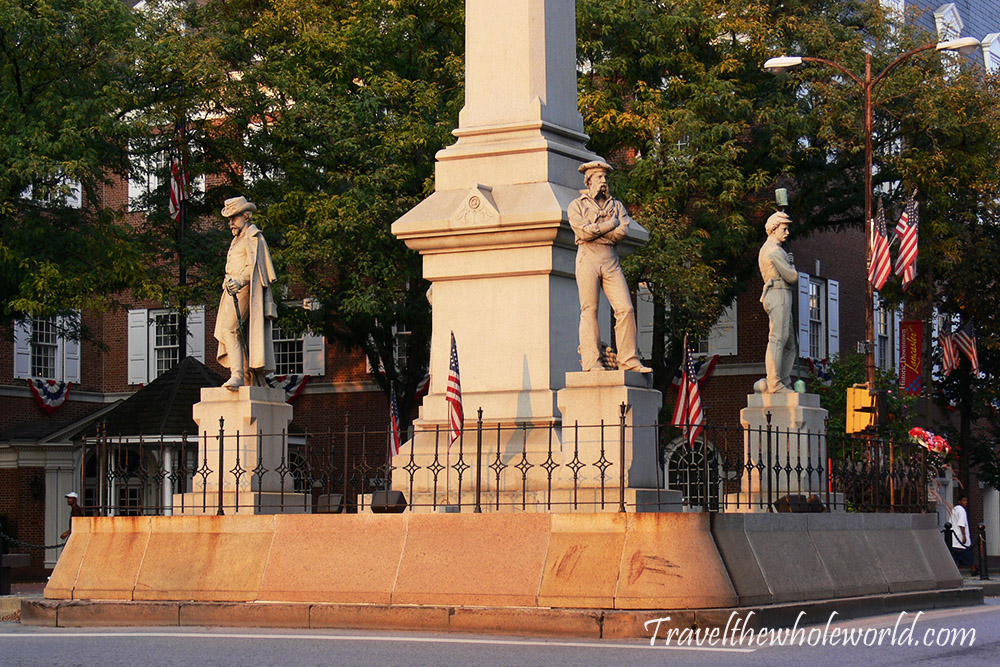
About a decade and a half ago I made a half-day visit to Lancaster, Pennsylvania, and sadly I have yet to return. I say that because it wasn’t until I arrived that I realized this place deserved much more time. For such a small city, there’s quite a bit of history and culture to explore in Lancaster. During the Revolutionary War, Lancaster even served as the capital of the United States for a single day in 1777 after the Continental Congress fled Philadelphia. The surrounding countryside is also famous for its large Amish population, making this one of the most distinctive parts of Pennsylvania. I didn’t have enough time to properly explore the historic sites or Amish country on this trip, but I was at least able to experience downtown Lancaster and some of the surrounding countryside. Above is Penn Square in the center of the city.
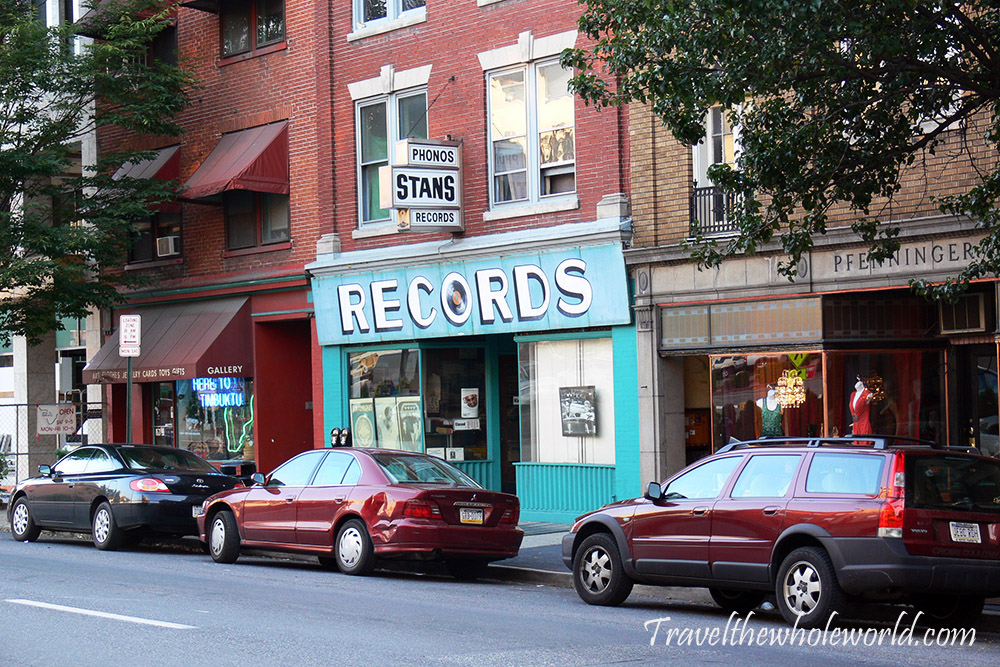
Lancaster only felt small to me because I was used to comparing cities with places like Pittsburgh and Philadelphia. While it doesn’t have a skyline filled with skyscrapers, Lancaster is one of the oldest inland cities in the United States. The community dates back to the early 18th century, long before the United States became a country, and today the city itself has a population of around 60,000. Downtown has retained plenty of historic architecture, with restaurants, shops, churches, and older buildings lining its streets.

Even though I only had a few hours to explore, downtown Lancaster was much livelier than I expected. The historic center has a good mixture of old architecture and modern businesses, with plenty of places to eat and drink. It made me realize that Lancaster isn’t simply a base for visiting Amish country; the city itself has enough history and character to deserve some time.
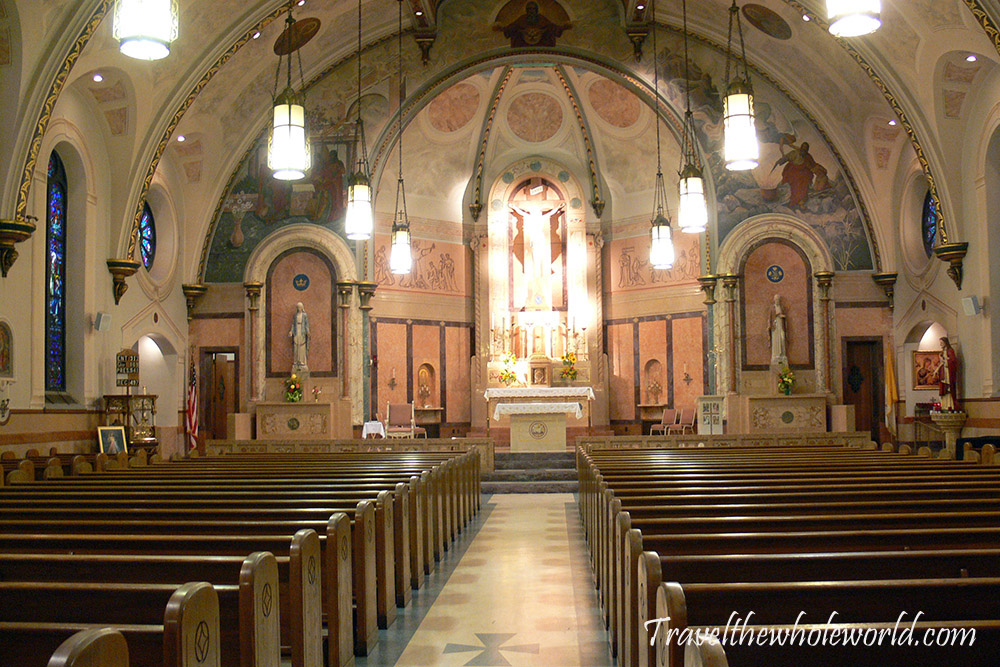
My trip to Lancaster was really more of a stopover, so much of my time was spent exploring the city on foot. During my walk I went inside St. Anthony of Padua Church, which dates to the 19th century. Another historic landmark I wish I had spent more time exploring is Lancaster Central Market. Established in the 18th century, the market is one of Lancaster’s best-known attractions and continues to operate in the heart of downtown.
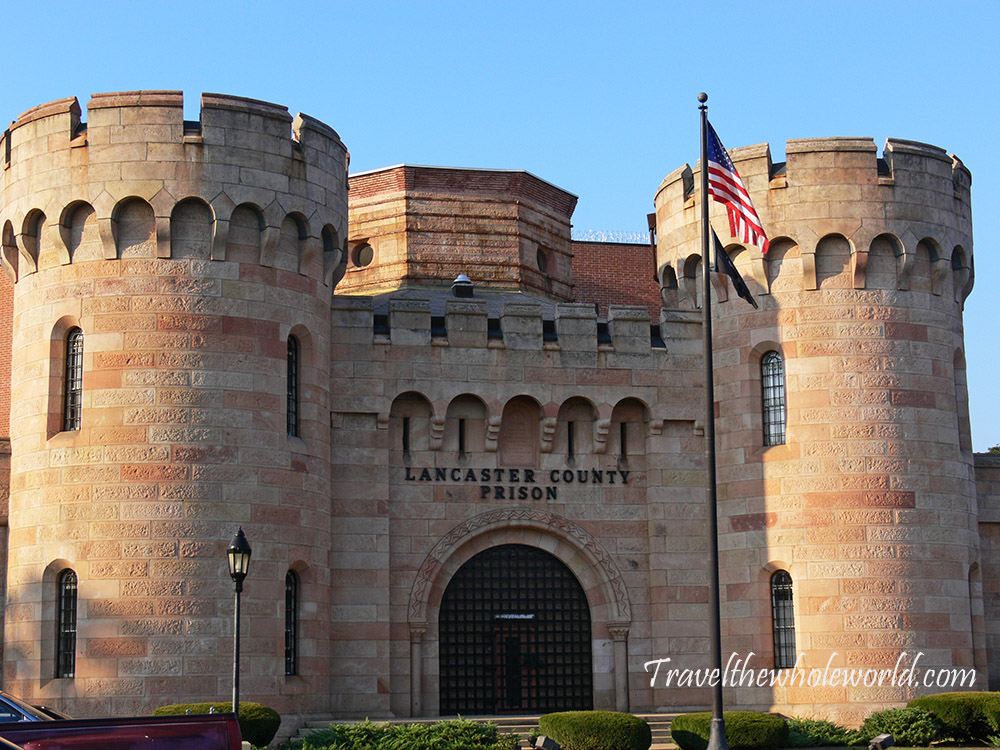
One place I specifically sought out was this castle-like building. Architecture like this isn’t something you come across very often in the United States, but despite its appearance, this was never a castle. It’s the Lancaster County Prison, a 19th-century building designed in a Gothic Revival style that makes it look more like a medieval fortress than a jail. The prison has a long history and was even the site of executions during the 19th and early 20th centuries. Since it was still an active correctional facility when I visited, seeing the exterior was obviously as far as my sightseeing was going to go.
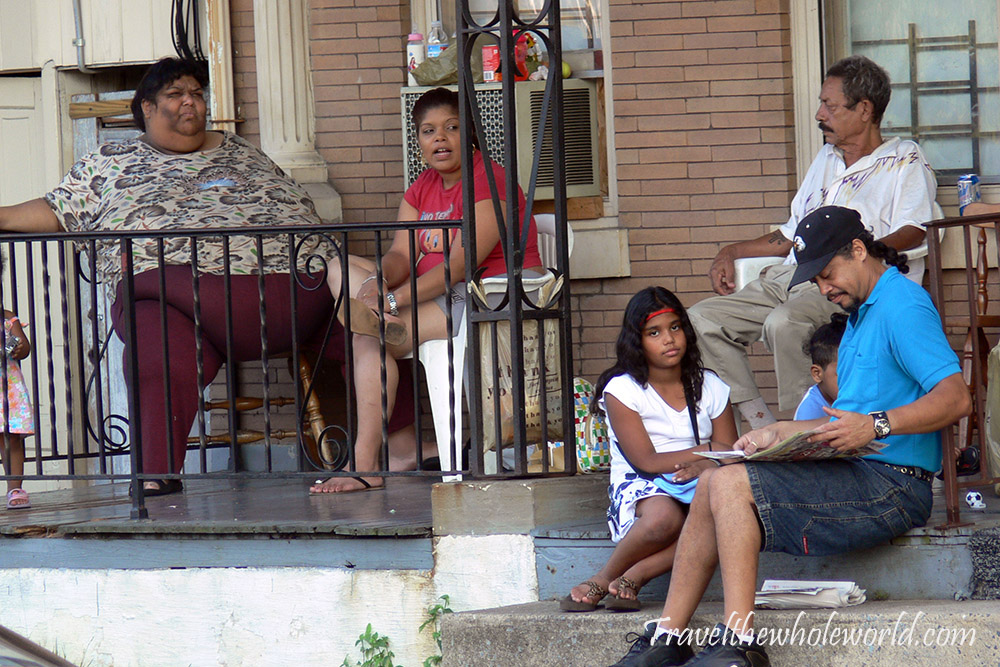
The prison sits among regular city neighborhoods, so I continued wandering through the surrounding streets afterward. Lancaster has a much more residential feel once you get away from the center, and scenes like this gave me a glimpse of everyday life in the city beyond its historic attractions.
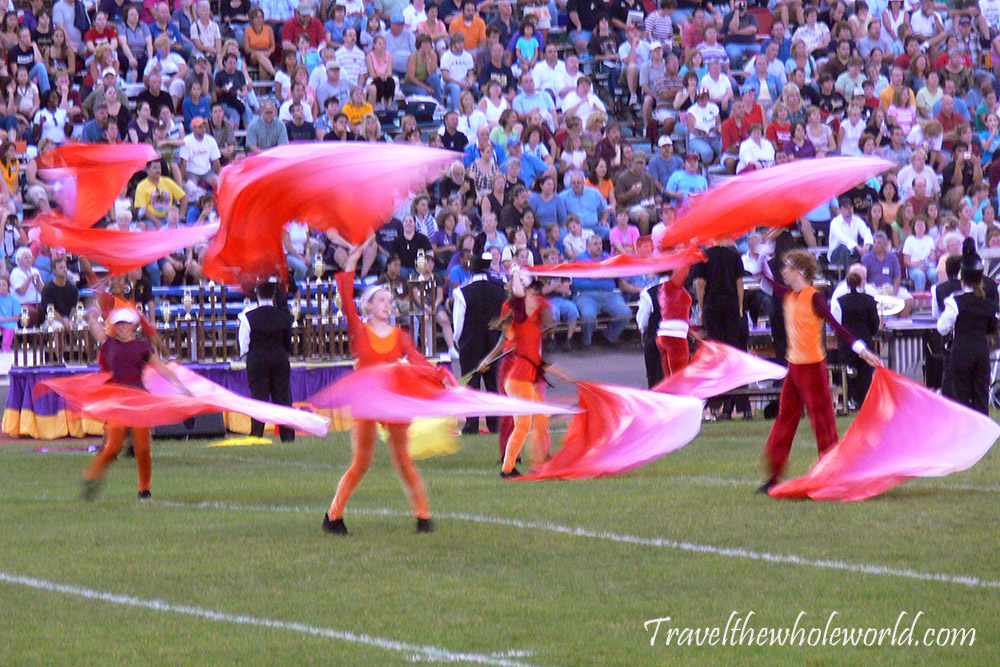
A small unexpected treat during my visit came when we heard live music from a local high school band. I walked over and asked someone at a booth what was going on and learned that it was a local competition. The woman working there was nice enough to give us free tickets, so what started as a random walk through Lancaster turned into a free show. Experiences like this are one of the reasons I enjoy exploring places without having every part of a trip planned in advance.
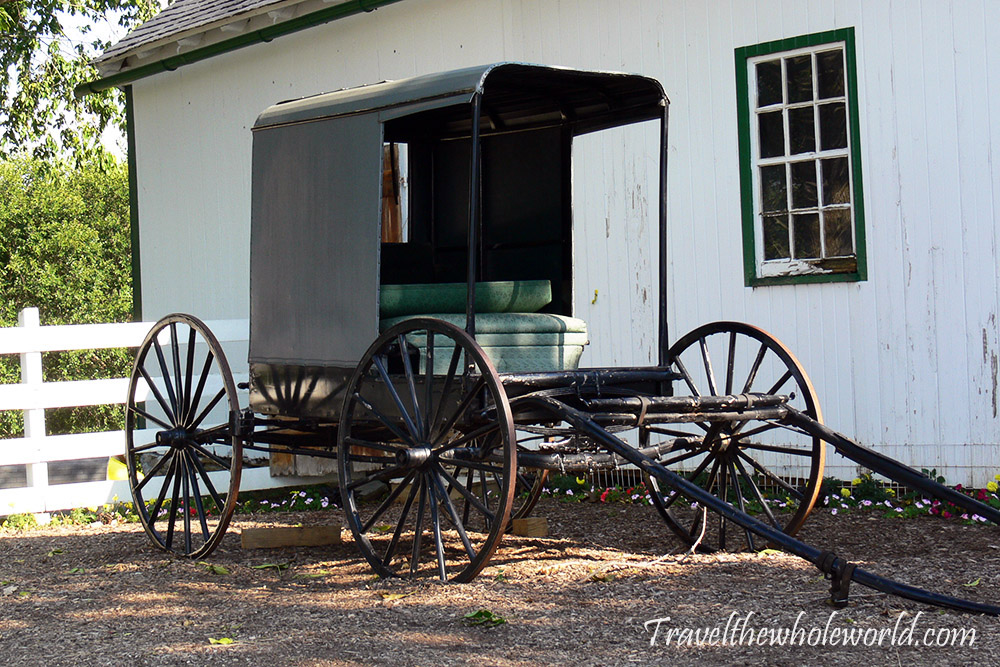
The countryside surrounding Lancaster is especially famous for its Amish communities. The Amish are a Christian group known for maintaining a traditional rural lifestyle and limiting the use of many modern technologies. Practices vary between different Amish communities, but horse-drawn buggies remain a common form of transportation, while farming and traditional trades continue to play an important role in everyday life. I didn’t get any good photographs of Amish residents themselves, and I wouldn’t want to intrude on anyone simply to get a picture. The carriage above was one of the few photographs I took that reflected this side of Lancaster County.
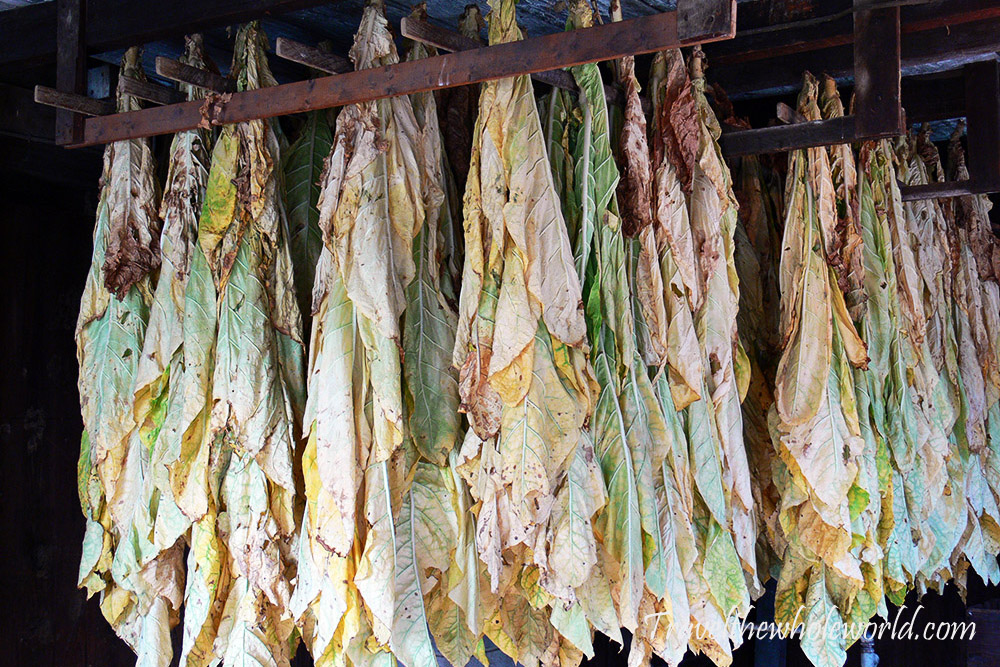
Agriculture is a major part of Lancaster County, and once outside the city the landscape quickly changes to farms, barns, and rolling countryside. Tobacco has historically been one of the crops grown in this part of Pennsylvania, and above you can see tobacco leaves hanging inside a barn to dry. Scenes like this made the countryside feel completely different from downtown Lancaster even though I hadn’t traveled very far.
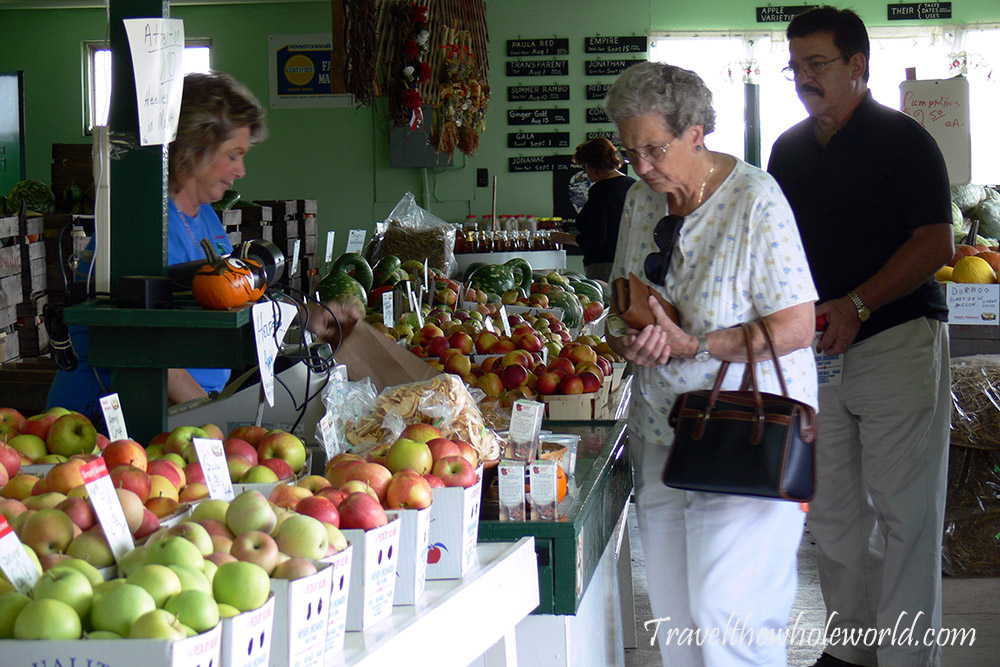
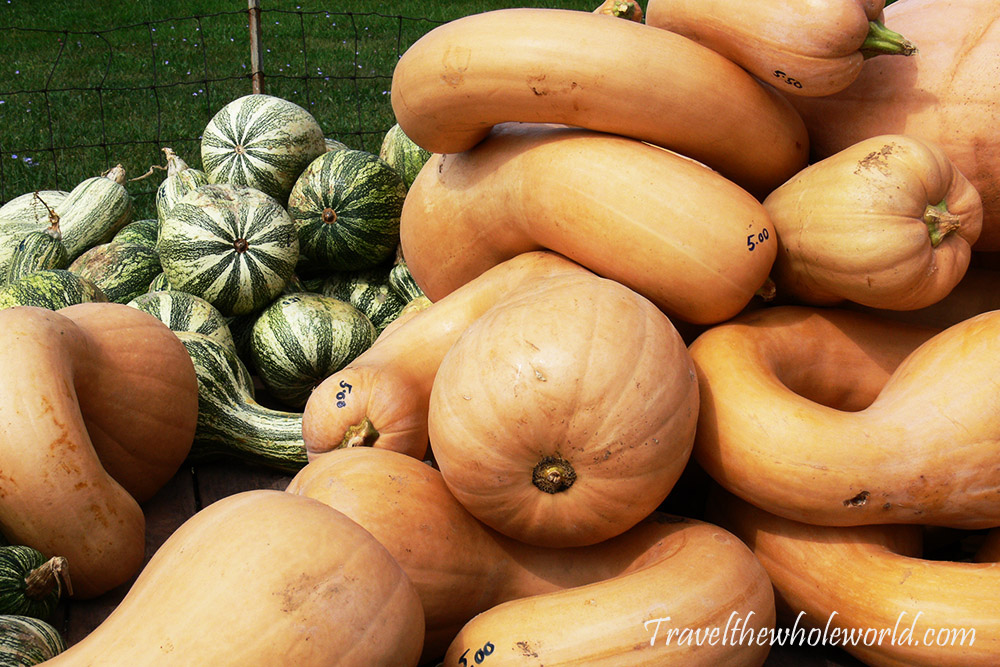
One benefit of traveling through such an agricultural region is the amount of locally grown produce available from farms and roadside stands. I visited in late September when squash and pumpkins were coming into season, so there was plenty of fresh produce for sale throughout the countryside.
Driving around Lancaster County was probably the part of the trip that made me most want to return. The farms, roadside produce, barns, horse-drawn buggies, and small communities create an atmosphere completely different from Pennsylvania’s larger cities. I only scratched the surface during this visit, and next time I’d like to spend much more time exploring the countryside and learning about the area’s farming traditions and Amish history.
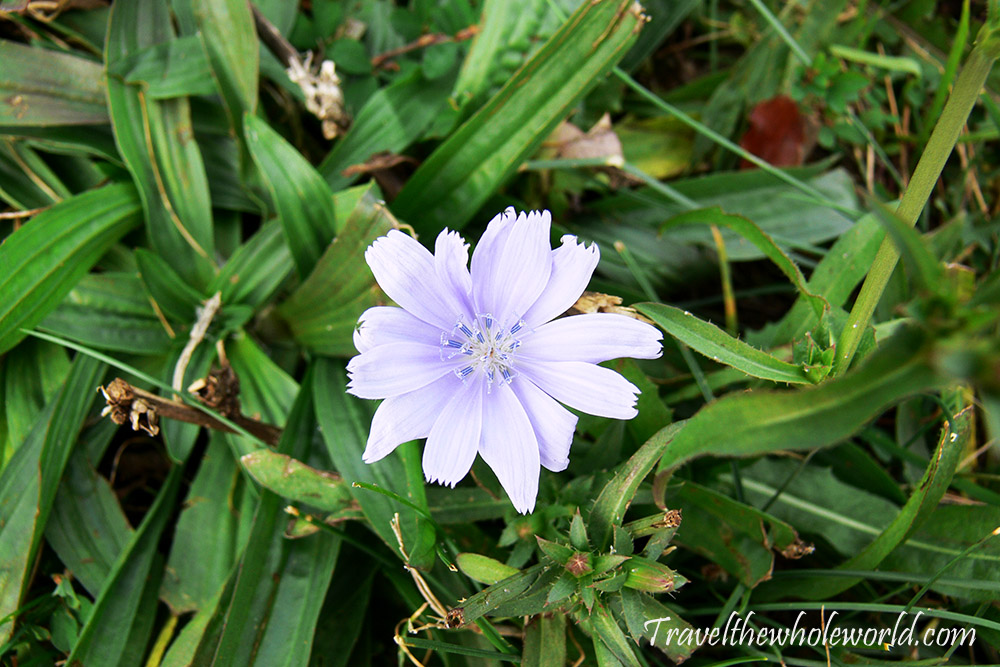
At the time, the countryside around Lancaster was about the closest I’d come to an outdoor experience in Pennsylvania. Roughly ten years later I returned to the state for a completely different type of trip, camping farther north in Allegheny National Forest. Lancaster County isn’t wilderness, but its farms and rural roads gave me a chance to slow down and see a greener, quieter side of Pennsylvania. While walking around the countryside I photographed this flower along with the chipmunk below.

For what was essentially a half-day stop, Lancaster left me with quite a bit unfinished. I’d like to return to properly explore the historic downtown, visit Central Market, spend more time in the surrounding countryside, and learn more about the Amish communities that have made Lancaster County famous. My first visit gave me just enough of the city and countryside to realize that Lancaster deserves considerably more than a few hours.
Explore More of Pennsylvania
Allegheny National Forest • Centralia • Gettysburg • Harrisburg • Lancaster • Philadelphia • Pittsburgh